

You will be received on arrival at the international airport (late evening) by a Perfact India Holiday.com
representative and transferred to the hotel
Its young, its lively and a confluence of varied cultural currents and cross currents have given Mumbai a unique position of the most multi-ethnic city of India. The capital city of Maharashtra State formerly known as Bombay lies in the southwestern part of India and occupies a peninsular site originally composed of seven islets lying off the KONKAN COAST of western India. Oozing with the cocksure self-confidence of a maverick moneymaker and Bindass
(carefree) attitude, Mumbai is also country's financial and commercial hub and has a principal port on the Arabian Sea.
Evening will be free for you to relax.
Overnight will be at Mumbai.
After breakfast, you will begin your day sightseeing with a tour to Prince of Wales Museum.
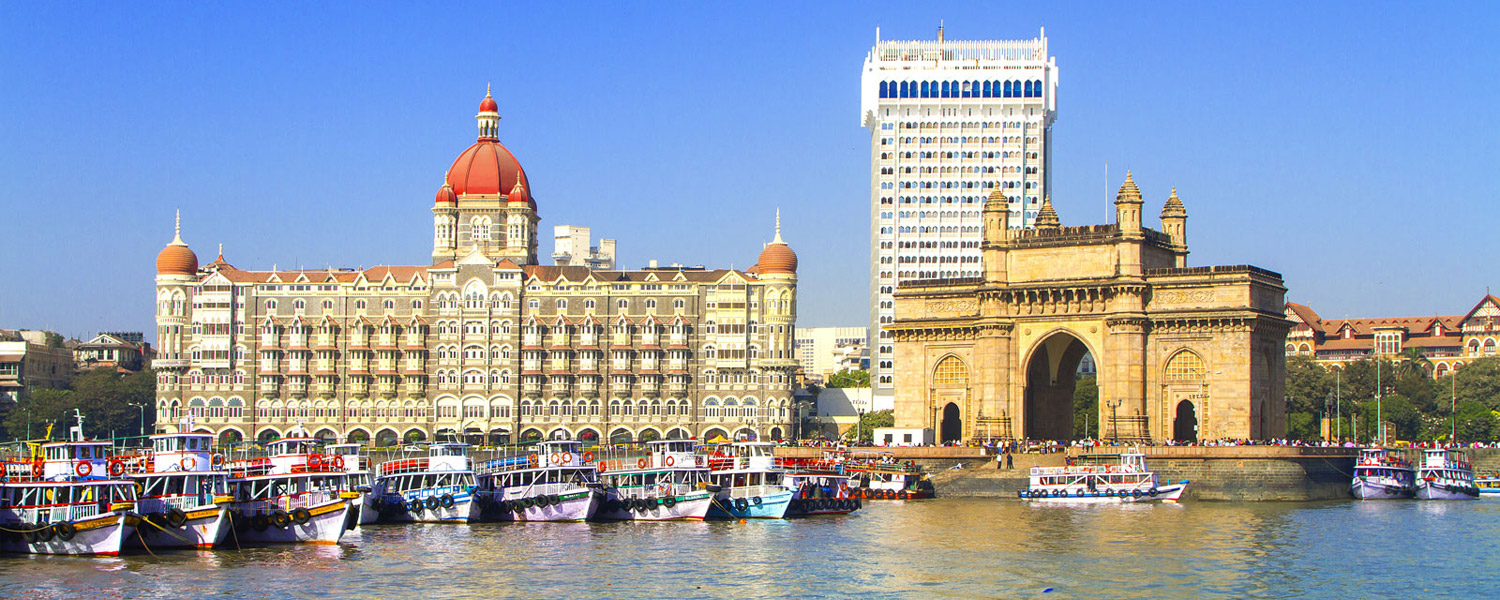
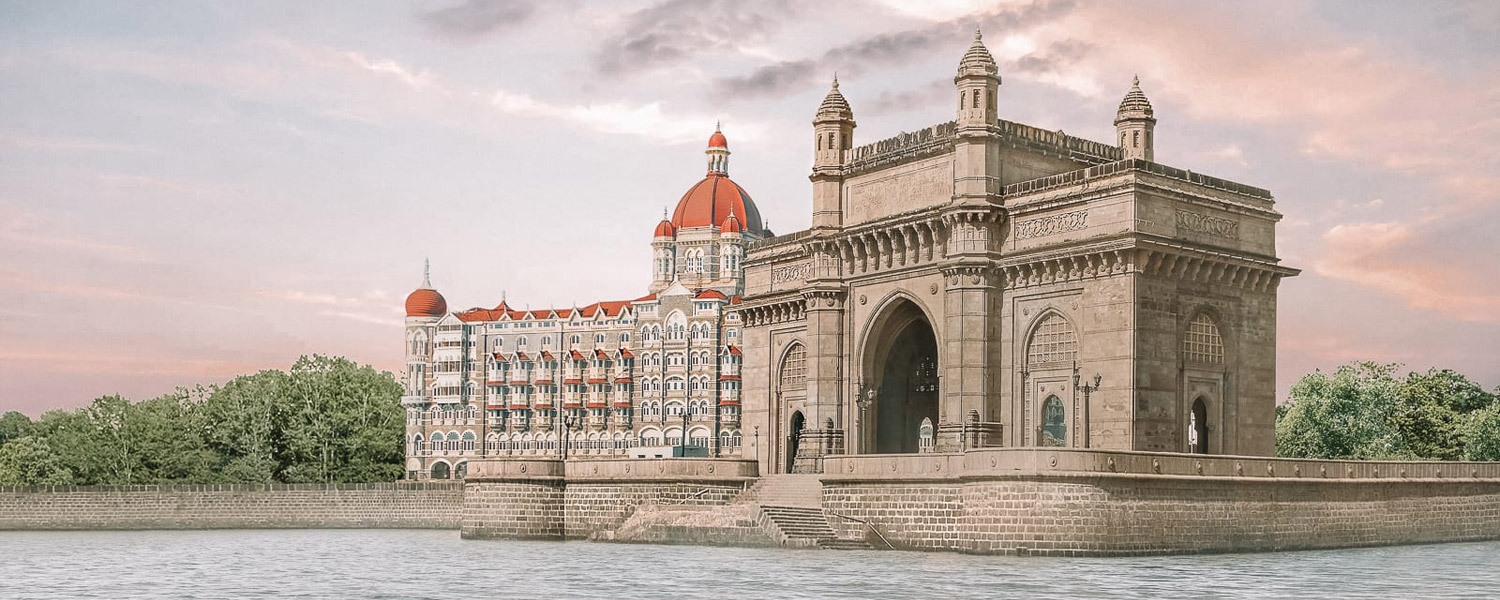
Gateway of India: Mumbai's principal landmark, the Gateway of India is a huge archway on the water's edge at Apollo Bunder. It is the starting point for most tourists who want to explore the city. This famous monument was built to commemorate the visit of the first ever British Monarch, King George V and Queen Mary in 1911.
Dhobi Ghat: unique feature of Mumbai, the dhobi is a traditional laundryman, who will collect your dirty linen, wash it, and return it neatly pressed to your doorstep, all for a pittance. The "laundries" are called "ghats": row upon row of concrete wash pens, each fitted with its own flogging stone. The clothes are soaked in sudsy water, thrashed on the flogging stones, then tossed into huge vats of boiling starch and hung out to dry. Next they are ironed and piled into neat bundles. The most famous of these Dhobi Ghats is at Saat Rasta near Mahalaxmi Station where almost two hundred dhobis and their families work together in what has always been a hereditary occupation.
Chor Bazaar is Mumbai's Chor Bazaar, which literally means "thieves market", has a fascinating history that spans more than 150 years. Apparently, it was originally called Shor Bazaar, meaning "noisy market", but "shor" became "chor" because of how the British mispronounced the word. Eventually, stolen goods started finding their way into the market, resulting in it living up to its new name! These days it's famous for antique and vintage items. A popular story about the origin of the name of the market is that a violin and some other belongings of Queen Victoria went missing while being unloaded from her ship while on a visit to Bombay, and were later found for sale in the "thieves' market"
According to popular legend, if you lose anything in Mumbai you can buy it back from the "Chor Bazaar" . In modern times, Chor Bazaar is said to sell mostly second-hand goods rather than stolen goods. The market is now famous for antique and vintage items. A store called Mini Market offers old Bollywood posters for sale. Others offer authentic Victorian furniture, replacement parts for automobiles, etc. Although bargains are sometimes staggering, haggling is considered mandatory. This is basically an "organized" flea market, where one has to rummage through junk to find what one wants.
Overnight will be at Mumbai.
After early breakfast, proceed for a day visit to the Elephanta Caves.
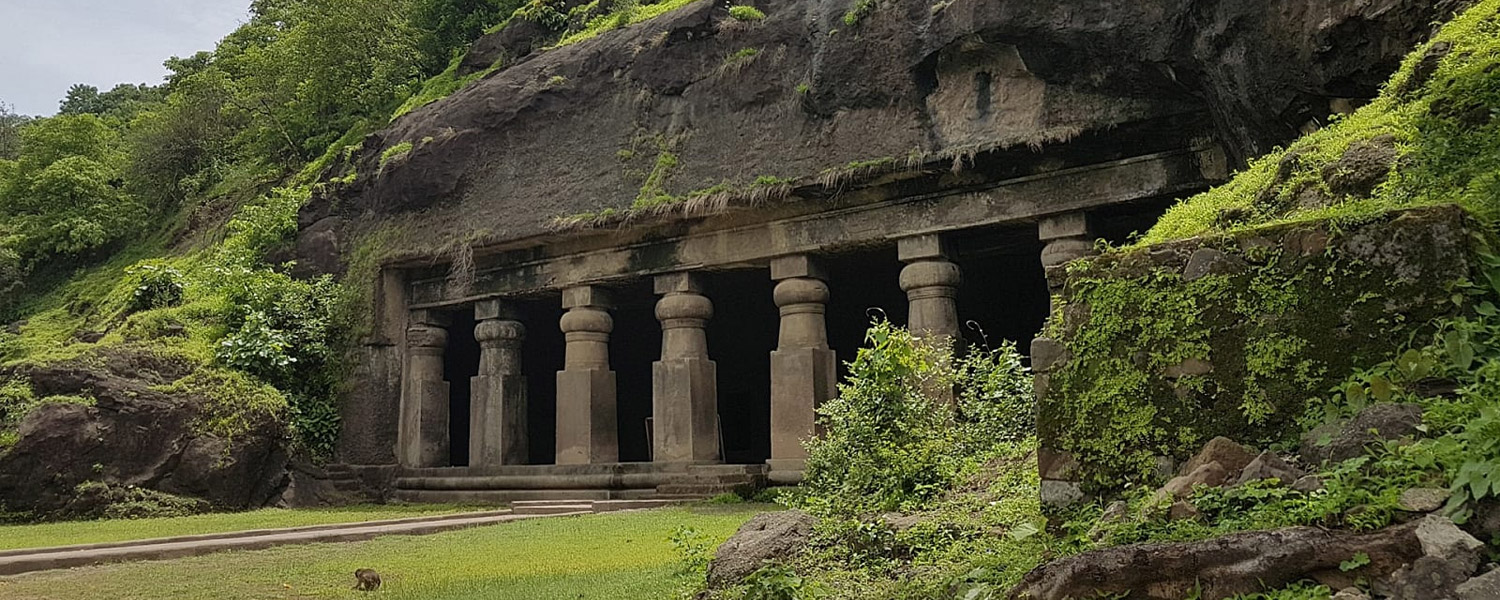
The Elephanta Island is the site of the magnificent Elephanta caves, containing beautiful carvings, sculptures, and a temple to the Hindu God, Lord Shiva. These caves are located at a distance of 11 km from Mumbai and are now designated as a UNESCO World Heritage Site. The island of Elephanta, being a commercial, military and religions centre for centuries has traces of early Buddhist culture.
The Elephanta caves are thought to date back to the Silhara kings belonging to the period between 9th - 12th centuries. With the Brahminical resurgence during the reign of Gupta dynasty in 3rd century AD, these great cave dedicated to Lord Shiva exploded into existence at Elephanta. Legends and history suggest that the great warrior prince of Chalukya dynasty Pulkesin ll raised the shrine to celebrate his victory. Some historians also suggest that these caves were built by the Kalchuri King Krishnaraja in 6th century AD.
As the worship of the figure of the Buddha began to be encouraged with rise of the Mahayana sect of Buddhism, a shrine was introduced to house Buddha's image, replacing the cells at the centre of the back wall. The Monasteries of Ajanta lead us directly to Elephanta.
An Exquisite Ensample OF Rock-Cut Artistry
No doubt the cave was the creation of an unknown genius, a master architect, who having thoroughly absorbed and assimilated the magnificent contribution of his predecessors in the dual traditions of the independent free standing sculpture and rock-cut architecture, produced a monument which introduced a whole new world of form quite distinct from any previous achievement.
The island was the capital of the powerful coastal kingdom and the excavations of the caves in the 6th century added to the glory of the kingdom. Later the Portuguese took possession of the island and as they first found a monolith elephant the island was named Elephanta.
It is believed that the caves were used as target practice after they constructed a fort and put a flag to ward off pirates. Whatever the cause may be, many of the sculptures have been desecrated. From the Portuguese, the British captured the island and tried to find out who had build these caves, but failed. The British planned to take the monolith elephant to England but they could not lift it. It is now kept in the Bombay Museum.
The island rises in two conical hillocks. The architect sculptors carved out of solid basalt rock create a representation of the heavenly mountain residence of Lord Shiva. Opening out from three sides, the temple lets in light from many angles making the sculptures seem to move with the changing angles of light.
Inside the temple is a large hall, with nine sculptured panels representing Lord Shiva in different moods. The temple plan is so symmetric with important focal points worked out in a geometric Mandala (the design that represents the energy field).
Flights of steps, which can prove to be very daunting, take one to the caves. One can also hire a chair to be carried up. Today the caves can be easily approached, but think of the time when the artisan used only the contours of the hill to reach the top and then chiselled out the basalt rocks to give it the shape of heavenly abode of Shiva. He has tried to create the cave similar to the one in which Shiva resides in the Himalayas.
The pillars inside the cave give an impression that these pillars support the roof. Again the cross beams on the roof makes the visitor feel there is a ceiling of the caves. The pillars have been deliberately kept simple as to attract the attention towards the exquisite carvings on the panels, which are nine in number. There are three opening to the caves, which allows light to enter from various angles in different seasons giving an expression that the images are moving with transition of light.
After sightseeing transfer to Hotel
Overnight will be at Mumbai
Breakfast will be served at the hotel.
As per the timings, you will be transferred to cruise port for your flight back home with sweet memories of the tour.
TOUR ENDS
+91-9899052721